
Non-Standard CNC Bushings: Tailored Solutions for Buyers
1. Introduction
In the world of high-performance industrial machinery, “standard” is often not good enough. While off-the-shelf components serve many purposes, specialized equipment operating under unique or extreme conditions requires parts engineered for a perfect fit and function. This is where non-standard CNC bushings become a critical strategic component.
The need for customization arises from complex operating conditions, the demand for special materials, or specific dimensional and tolerance requirements that standard parts cannot meet. For industrial buyers and engineers, sourcing non-standard parts is not just about finding a component that fits; it is a strategic choice aimed at extending equipment lifespan, enhancing reliability, and reducing long-term maintenance costs. This guide provides a comprehensive overview of non-standard CNC bushings and how to procure them effectively.
2. What Are Non-Standard CNC Bushings?
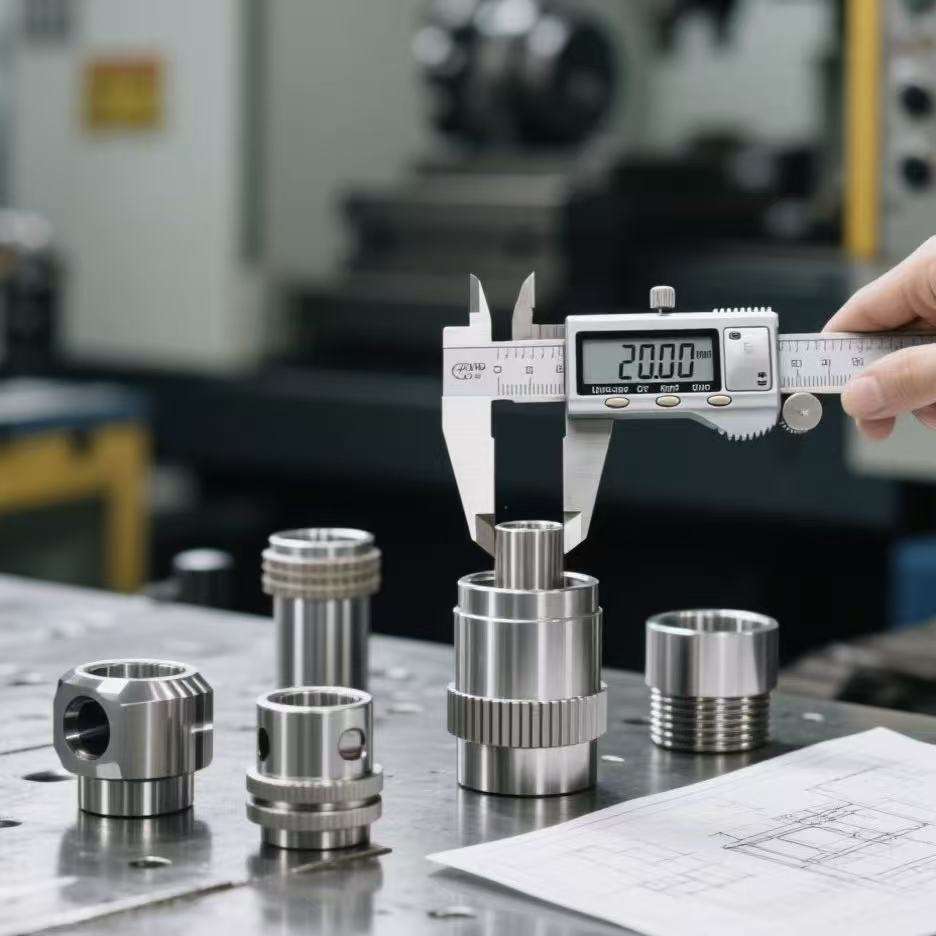
A “non-standard” or custom CNC bushing is a part whose dimensions, shape, material, or surface treatment does not conform to any standard catalog. It is manufactured specifically to a customer’s unique engineering drawing using precision CNC (Computer Numerical Control) machining.
While standard bushings are mass-produced to common sizes, non-standard bushings are tailored solutions for specific challenges found across industries like:
- Heavy Machinery & Construction
- Energy (Oil & Gas, Renewables)
- Automotive & Transportation
- Agriculture & Mining
- Aerospace & Defense
The core value of a non-standard bushing lies in its ability to perfectly match the equipment’s requirements. This avoids the compromises and potential wear-and-tear that can result from using a standard part that is “close enough” but not a perfect match.
3. Key Customization Options
The flexibility of CNC machining allows for a wide range of customization options.
3.1 Dimensions & Tolerances
This is the most common reason for specifying a non-standard bushing.
- Custom Dimensions: Manufacturers can produce bushings with any specific inner diameter (ID), outer diameter (OD), and length required by the design.
- Special Tolerances: Beyond standard dimensional accuracy, non-standard bushings can be machined to precise tolerance grades according to ISO 286, such as H7/h6 (for tight clearance fits) or H8/f7 (for general sliding fits). While a standard part may have a general tolerance, a custom part can have specific, tighter tolerances applied only to critical surfaces, optimizing both performance and cost.
3.2 Materials
Material selection is crucial for performance in demanding environments.
- Bronze / Brass: Ideal for high-friction environments due to their excellent wear resistance and self-lubricating properties.
- Alloy Steel: The top choice for high-impact and heavy-load conditions. Can be heat-treated to achieve superior strength and hardness.
- Stainless Steel / Duplex: Essential for corrosive environments, such as marine, offshore, or chemical processing applications.
- Engineering Plastics (Nylon, PEEK, PTFE): Used for lightweight applications, chemical resistance, or where external lubrication is not possible.
3.3 Surface & Heat Treatments
These post-machining processes enhance a bushing’s durability and suitability for harsh conditions.
- Heat Treatment: Processes like quenching, carburizing, and nitriding are applied to steel bushings to create a very hard, wear-resistant surface while keeping the core tough and impact-resistant.
- Surface Treatment: Coatings like hard chrome plating, nickel plating, phosphating, or powder coating are used to improve corrosion resistance, reduce friction, or enhance wear properties.
3.4 Special Features
Multi-axis CNC machining makes it possible to incorporate complex features into a single part.
- Oil Grooves: Machined in various patterns (e.g., spiral, figure-eight) to distribute grease or oil effectively.
- Threads: For securing the bushing in place.
- Keyways or Flats: To prevent rotation within the housing.
- Cross-Holes: For lubrication or locking pins.
4. Industry Applications of Non-Standard CNC Bushings
The need for tailored solutions is present across all major industrial sectors.
4.1 Construction & Heavy Machinery
Excavators, loaders, and cranes rely on non-standard, heavy-duty alloy steel bushings in their pivot points. These parts are often made to specific oversized or undersized dimensions to repair worn equipment and are heat-treated to withstand immense shock loads.
4.2 Automotive & Transportation
In suspension systems and steering components, non-standard bushings with specific tolerances are used to ensure low noise, high precision, and optimal handling performance.
4.3 Oil & Gas / Marine
The corrosive nature of saltwater and chemicals requires bushings made from stainless steel, duplex, or PEEK. These are often custom-designed to fit specific valve bodies, pumps, and subsea equipment where standard sizes are unavailable.
4.4 Agriculture & Mining
In high-dust and abrasive environments, custom bronze or hardened steel bushings with specialized oil grooves are used to retain lubrication and flush out contaminants, significantly reducing wear on critical pivot points.
5. Benefits of Non-Standard CNC Bushings for Buyers
Investing in non-standard CNC bushings provides tangible returns for industrial buyers.
- Precision Fit: A tailored bushing ensures perfect alignment and load distribution, which extends the service life of the entire assembly.
- Reduced Downtime: Parts designed for the specific application are more reliable, leading to fewer breakdowns and lower maintenance costs.
- Enhanced Performance: A custom solution can improve the overall efficiency, accuracy, and reliability of the machinery.
- Compliance: Non-standard bushings can be manufactured to meet specific industry certifications or customer-driven quality requirements.
6. Supplier Evaluation & Procurement Insights
Choosing the right manufacturing partner is key to successful procurement.
6.1 Evaluating Suppliers
Focus on three key areas. A quick checklist can help guide your evaluation:
Supplier Evaluation Checklist:
- ✅ Technical Capabilities: Do they have multi-axis CNC machining centers and certified partners for heat treatment and surface coatings?
- ✅ Quality Assurance: Are they ISO 9001 / IATF 16949 certified? Do they use CMMs, surface roughness testers, and hardness testers?
- ✅ Industry Experience: Can they demonstrate a successful track record in your specific industry and with your required materials?
- ✅ Documentation: Are they able to provide full material traceability and detailed inspection reports with every order?
6.2 Procurement Best Practices
- Provide a Detailed RFQ: A Request for Quotation should include 2D and 3D drawings, material standards, all tolerance requirements, and specifications for any treatments.
- Discuss MOQ and Lead Time: Understand the supplier’s Minimum Order Quantity and standard lead times. For recurring needs, explore options for blanket orders to lower unit costs and secure supply.
- Communicate Openly: A good supplier will act as a partner, providing feedback on your design to optimize it for manufacturability and cost-effectiveness.
7. Cost Factors of Non-Standard CNC Bushings
The price of a non-standard bushing is a composite of several factors:
- Material Cost: The base price of the chosen alloy or polymer.
- Machining Complexity: The more features and tighter tolerances, the longer the machine time.
- Treatments: Each heat treatment or coating adds a separate cost.
- Volume: Small batches have a higher per-unit cost due to setup expenses.
While a non-standard bushing may have a higher unit price than a standard part, its Total Cost of Ownership (TCO) is often significantly lower. The extended life and reduced maintenance it provides deliver a far better return on investment.
8. Conclusion
Non-standard CNC bushings are more than just custom parts; they are a critical investment in the reliability and longevity of your equipment. For industrial buyers, the focus should shift from comparing unit prices to evaluating performance, supplier capability, and long-term cost savings.
Choosing a supplier with expertise in precision machining, robust quality control, and a deep understanding of industrial applications is essential.
Contact our engineering team today to discuss tailored CNC bushing solutions. We provide full support from material selection to precision machining, ensuring your equipment runs reliably under the toughest conditions.