
CNC Machining Challenges in Bushing Production: A Buyer’s Guide
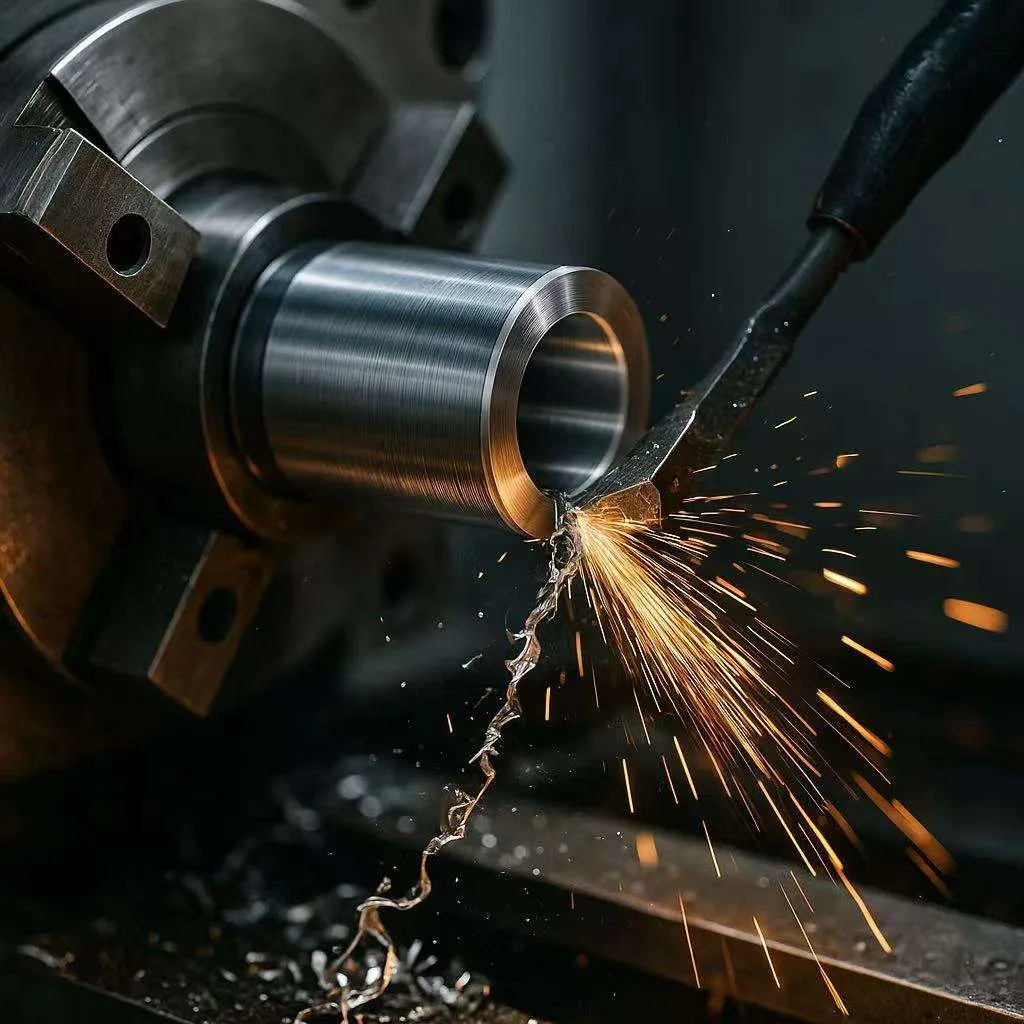
1. Introduction
CNC bushings are fundamental components in industrial machinery, critical for ensuring precision, durability, and cost-efficiency. While they may appear to be simple cylindrical parts, manufacturing them to a high standard is a complex process fraught with technical challenges. For industrial buyers and procurement managers, understanding these challenges is not just an academic exercise—it is essential for accurately evaluating a supplier’s capabilities and the true value behind their quotation.
A supplier who has mastered these challenges will deliver a reliable, long-lasting component. One who hasn’t will deliver a part that leads to premature equipment failure and costly downtime. This guide explores the key challenges in CNC bushing production and how expert manufacturers overcome them.
2. Challenge 1: Holding Tight Tolerances
High-performance bushings often require extremely tight dimensional and geometric tolerances, frequently in the range of ±0.01 mm (0.0004 inches) or even tighter.
- The Challenge: Several factors conspire to cause dimensional drift during machining. The cutting forces can cause minute deflections in the workpiece or tool. Tool wear, even after just a few parts, can alter the final dimensions. Thermal expansion of the machine tool itself from hours of operation can also lead to inconsistencies.
- The Solution: Overcoming this requires significant investment and process control. High-end suppliers use high-rigidity CNC machines that minimize deflection. They operate in temperature-controlled workshops to prevent thermal expansion from affecting accuracy. Furthermore, they may use in-process measurement probes or laser micrometers to automatically check dimensions and compensate for tool wear in real-time.
3. Challenge 2: Surface Roughness Control
A bushing’s surface roughness (e.g., Ra 0.4–1.6 µm) is critical. It directly impacts friction, lubrication retention, and the service life of both the bushing and its mating shaft.
- The Challenge: Standard CNC turning processes may struggle to consistently achieve a very fine surface finish, especially on tougher materials. The finish can be affected by cutting speed, feed rate, tool geometry, and vibration. Achieving a low Ra value is a delicate balancing act.
- The Solution: For applications demanding a superior finish (e.g., Ra < 0.8 µm), a secondary process is often required. Grinding, honing, or superfinishing are abrasive processes that can produce a much smoother and more controlled surface. While these processes add cost, they are essential for high-performance hydraulic and bearing applications where a perfect lubrication film is necessary.
4. Challenge 3: Material Machinability
CNC bushings are made from a wide range of materials, each presenting unique machining challenges.
- The Challenge:
- Hardened Alloy Steels (e.g., 4140): These materials are abrasive and tough, leading to rapid tool wear and the risk of tool chipping.
- Bronze and Copper Alloys: While softer, these materials can be “gummy,” leading to built-up edge on the cutting tool, which degrades the surface finish.
- Stainless Steel: This material is known for work-hardening, meaning it becomes harder as it is being cut, which requires very rigid setups and specific cutting parameters.
- Engineering Plastics: These can be prone to melting or warping if the incorrect cutting speeds or tool geometries are used.
- The Solution: An experienced manufacturer overcomes these challenges by meticulously selecting the right cutting tools (often with advanced coatings like TiAlN), optimizing cutting speeds and feed rates, and using the correct type of high-pressure coolant to manage heat and chip evacuation.
5. Challenge 4: Heat Treatment Distortion
Heat treatment (quenching, carburizing, etc.) is essential for achieving the required hardness and wear resistance in steel bushings. However, this process can be a major source of distortion.
- The Challenge: The intense heating and rapid cooling involved in heat treatment relieve internal stresses in the material, which can cause the part to warp, shrink, or go out of round. Large diameter or thin-walled bushings are particularly susceptible to this, often becoming oval-shaped.
- The Solution: A professional supplier plans for this distortion. They will intentionally leave a small amount of extra material on the bushing before heat treatment. After the part has been hardened, it undergoes a final precision grinding or hard turning operation. This final pass removes the excess material and corrects any distortion, bringing the final dimensions back into the tight tolerance window.
6. Challenge 5: Lubrication Features Machining
Features like oil grooves, lubrication holes, or pockets for solid lubricant plugs are critical for a bushing’s performance but add significant manufacturing complexity.
- The Challenge: Machining a spiral oil groove inside a small-diameter bore or drilling angled cross-holes requires more than a simple lathe. These features often demand specialized tooling, complex programming, and multiple machine setups or the use of more advanced multi-axis CNC machines.
- The Solution: Capable suppliers utilize multi-axis CNC turning centers or 4/5-axis milling machines. This allows them to machine these complex features in a single setup, which not only saves time but also ensures the features are positioned accurately relative to the main diameters. This requires a high level of programming expertise and investment in advanced machinery.
7. Challenge 6: Inspection & Quality Control
Verifying that a bushing meets all specifications is a challenge in itself, especially in high-volume production.
- The Challenge: Manually inspecting tight tolerances, complex geometric features, and surface roughness on every part is time-consuming and prone to human error. However, without rigorous inspection, non-conforming parts can be shipped to the customer.
- The Buyer’s Focus: A reliable supplier invests in a suite of advanced inspection equipment, including CMMs (Coordinate Measuring Machines), surface profilometers, and digital hardness testers. They should have a clear quality control process that includes a First Article Inspection (FAI) for every new part and a documented batch inspection plan. The cost of this rigorous QC is a necessary part of producing a reliable component.
8. Case Example
A manufacturer of hydraulic cylinders was sourcing bushings from a supplier that relied solely on CNC turning. They experienced a high rate of premature seal failure, which was traced back to inconsistent bushing tolerances. Although the bushings were within a general tolerance, the supplier’s lack of a temperature-controlled inspection environment meant that parts measured at different times of the day had slight variations.
They switched to a new supplier who performed a final grinding process after heat treatment and conducted all final inspections in a climate-controlled QC lab using a CMM. Despite a slightly higher unit price, the new, more consistent bushings extended the service life of the hydraulic seals by 30%, drastically reducing warranty claims and improving customer satisfaction.
9. Conclusion & Call to Action
The production of a high-quality CNC bushing is a battle against numerous technical challenges. A supplier’s ability to consistently overcome issues related to tolerance, surface finish, material machinability, and distortion is what separates a world-class manufacturer from a standard machine shop.
For industrial buyers, it is crucial to look beyond the unit price and supplier’s investment in process control, advanced machinery, and rigorous quality assurance. This focus on capability is the best way to ensure you are sourcing components that will enhance your equipment’s reliability and lower your total cost of ownership.
Contact our engineering team today to discuss your project. We can provide a customized solution for CNC bushings that meets the most demanding tolerance and surface finish requirements. Work with a supplier who not only machines parts but understands the engineering challenges behind them.