
Export Standards for CNC Bushings: A Guide for Global Buyers
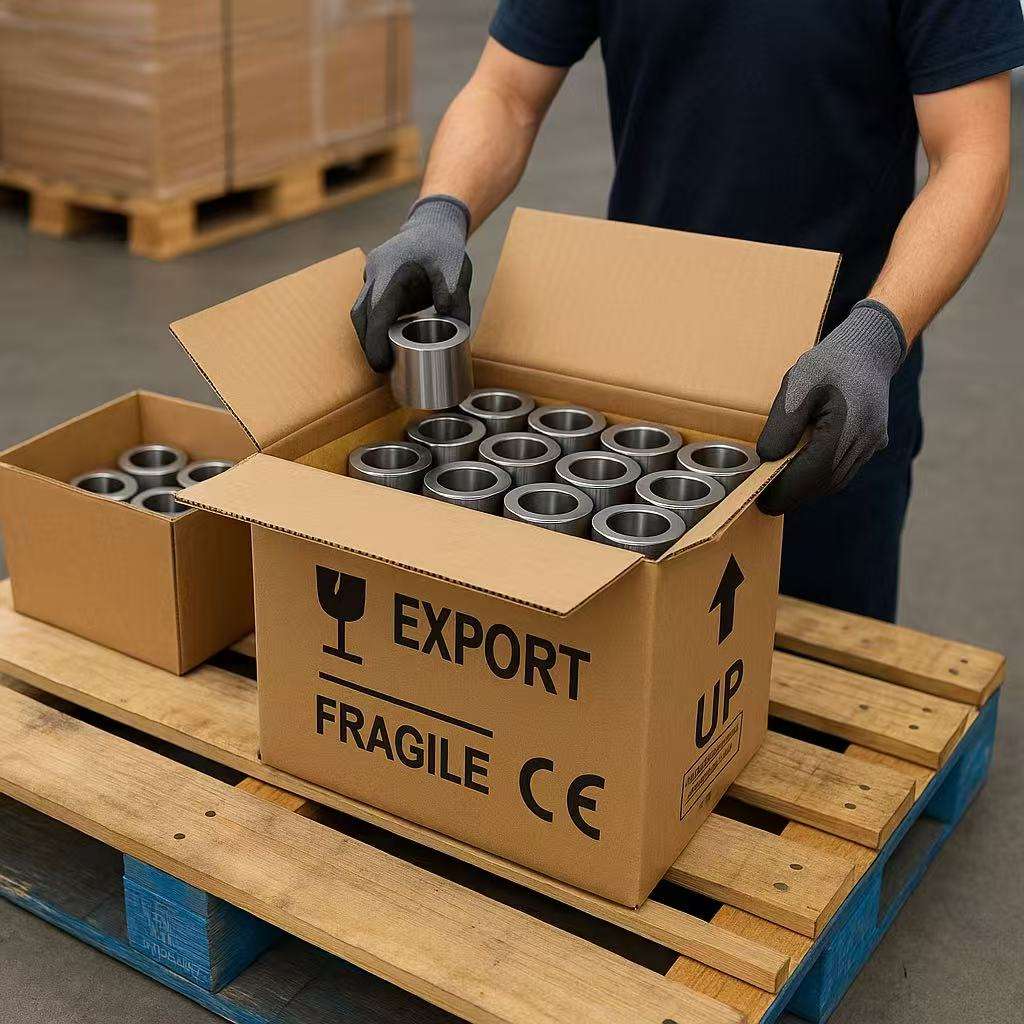
1. Introduction
In the global marketplace, CNC bushings are crucial components that power machinery across continents. For international buyers, sourcing these parts involves more than just finding a supplier with the right machining capabilities. Adherence to a complex web of export standards is paramount. These standards are the foundation of a reliable supply chain, ensuring regulatory compliance, consistent quality, transportation safety, and smooth customs clearance.
Failing to meet these standards can result in rejected shipments, costly delays, and legal liabilities. This guide is designed for industrial buyers and procurement managers to provide a clear and comprehensive overview of the key CNC bushings export standards, empowering you to vet suppliers and secure a supply chain that is both robust and compliant.
2. Core International Standards
A professional supplier must demonstrate fluency in the international standards that govern precision components. These standards ensure that parts made in one country will fit and function correctly in another. As a buyer sourcing from CNC bushing suppliers in China, verifying fluency in these standards is a primary step.
ISO Standards
The International Organization for Standardization provides the most globally recognized framework.
- ISO 286: Defines the system of fits and tolerances for cylindrical parts (e.g., H7/h6), which is the cornerstone of bushing design.
- ISO 2768: Covers general tolerances for linear dimensions and geometric features.
- ISO 9001: This is the standard for a Quality Management System. A supplier with this certification has proven they have a structured, repeatable process for ensuring quality.
DIN Standards
German Institute for Standardization (Deutsches Institut für Normung) standards are widely respected in Europe and are often referenced for bushing dimensions and fits.
ASTM Standards
American Society for Testing and Materials standards are critical for the U.S. market. They cover everything from the chemical composition of raw materials (e.g., ASTM B505 for bronze alloys) to mechanical properties and coating test methods.
JIS Standards
Japanese Industrial Standards are frequently required by buyers in Japan and other parts of Asia.
3. Material & Compliance Certifications
Traceable documentation is the buyer’s guarantee that the material and processes used meet the required specifications. Ensuring international compliance for CNC bushings relies heavily on this paper trail.
- Material Test Certificates (MTC): Also known as a Mill Test Report (MTR) or a 3.1 Certificate, this document provides the exact chemical composition and mechanical properties of the raw material batch used to produce your bushings. It is your proof that you received the specified grade of steel, bronze, or other alloy.
- Heat Treatment Certificates: For hardened steel bushings, this certificate verifies the process used (e.g., quenching and tempering, carburizing) and provides the resulting hardness readings (e.g., 58-62 HRC). This is crucial for durability.
- Coating & Corrosion Tests: For plated or coated bushings, a supplier should be able to provide reports on coating thickness and corrosion resistance, often validated by a Salt Spray Test (per ASTM B117).
- RoHS / REACH Compliance:
- RoHS (Restriction of Hazardous Substances): This EU directive restricts the use of specific hazardous materials.
- REACH (Registration, Evaluation, Authorisation and Restriction of Chemicals): Another EU regulation managing chemical use. Compliance with both is mandatory for parts imported into the European Union and is a key indicator of a supplier’s commitment to environmental safety.
4. Export Packaging Standards
How a part is packaged is just as important as how it is made, especially for international sea freight. These are key CNC bushings export standards that protect your investment.
ISPM 15 Wooden Crates
This is a mandatory international standard for all wood packaging material (WPM). It requires that all wooden crates, pallets, and dunnage be heat-treated or fumigated to prevent the international transport of pests. All compliant wood will be stamped with the official ISPM 15 mark. Non-compliant packaging can be quarantined or destroyed by customs authorities.
VCI Bags & Anti-Rust Oil
To combat corrosion during long sea voyages through humid climates, steel bushings must be protected. This is typically done by coating them in anti-rust oil and then sealing them in VCI (Vapor Corrosion Inhibitor) bags. These bags release a vapor that forms a protective layer on the metal surface.
Labeling Requirements
For efficient logistics and receiving, every box and crate must be clearly and accurately labeled with the Part Number, Purchase Order (PO) Number, Quantity, and Production Batch Number for traceability.
5. Supplier Documentation & Traceability
A professional supplier should have a robust system for documentation that allows for full traceability.
- FAI (First Article Inspection) Reports: For any new part, the supplier should provide a detailed FAI report. This is a comprehensive inspection of the first part produced, verifying that every dimension and specification on the drawing has been met before mass production begins.
- Batch Inspection Records: The supplier should be able to provide summary inspection reports for each production batch, demonstrating ongoing quality control.
- Traceability: This is the ability to link a specific, finished bushing all the way back through the production process to the exact batch of raw material it was made from. This is critical for root cause analysis in the event of a quality issue.
6. Buyer’s Checklist for Export Standards
Use this checklist to evaluate a potential supplier’s compliance with key export standards:
- ✅ Confirm ISO/DIN/ASTM Compliance: Does the supplier demonstrate experience and understanding of the international standards relevant to your product?
- ✅ Request MTC, Hardness & Coating Reports: Make these documents a mandatory part of your purchase order.
- ✅ Ensure RoHS/REACH for EU Market: If applicable, request a formal certificate of compliance.
- ✅ Verify Packaging Meets ISPM 15: Ask for a photo of the ISPM 15 stamp on their wooden crates.
- ✅ Require Inspection & Traceability Docs: Make FAI reports and batch inspection data a standard deliverable.
7. Conclusion
Adherence to export standards for CNC bushings is not just a matter of regulatory compliance; it is a fundamental pillar of risk management and quality assurance in the global supply chain. By partnering with a supplier who understands and proactively implements these standards, buyers can ensure they receive high-quality components, avoid costly customs delays, and build a reliable and resilient supply network.
By choosing a supplier with proven export compliance, you reduce risks, shorten lead times, and guarantee smoother customs clearance. Contact our team today to partner with a supplier who is an expert in international standards. We can provide a comprehensive export solution for your custom CNC bushings, complete with full documentation and compliance.