
Stainless Steel CNC Sleeves for Industrial Applications
Introduction
In modern industrial equipment, CNC sleeves are fundamental components that provide support, reduce friction, and extend the service life of critical shafts and pins. While a variety of materials can be used, applications in harsh or specialized environments present a unique set of challenges that demand a superior solution. This is where the unique value of stainless steel becomes evident. Its inherent corrosion resistance, high strength, and hygienic properties make it the material of choice for the most demanding industries. For global buyers, stainless steel CNC sleeves are not only about corrosion resistance but also about regulatory compliance and lifecycle cost savings.
This guide will provide a comprehensive overview of stainless steel CNC sleeves, covering material grades, key advantages, and critical procurement considerations.
What Are Stainless Steel CNC Sleeves?
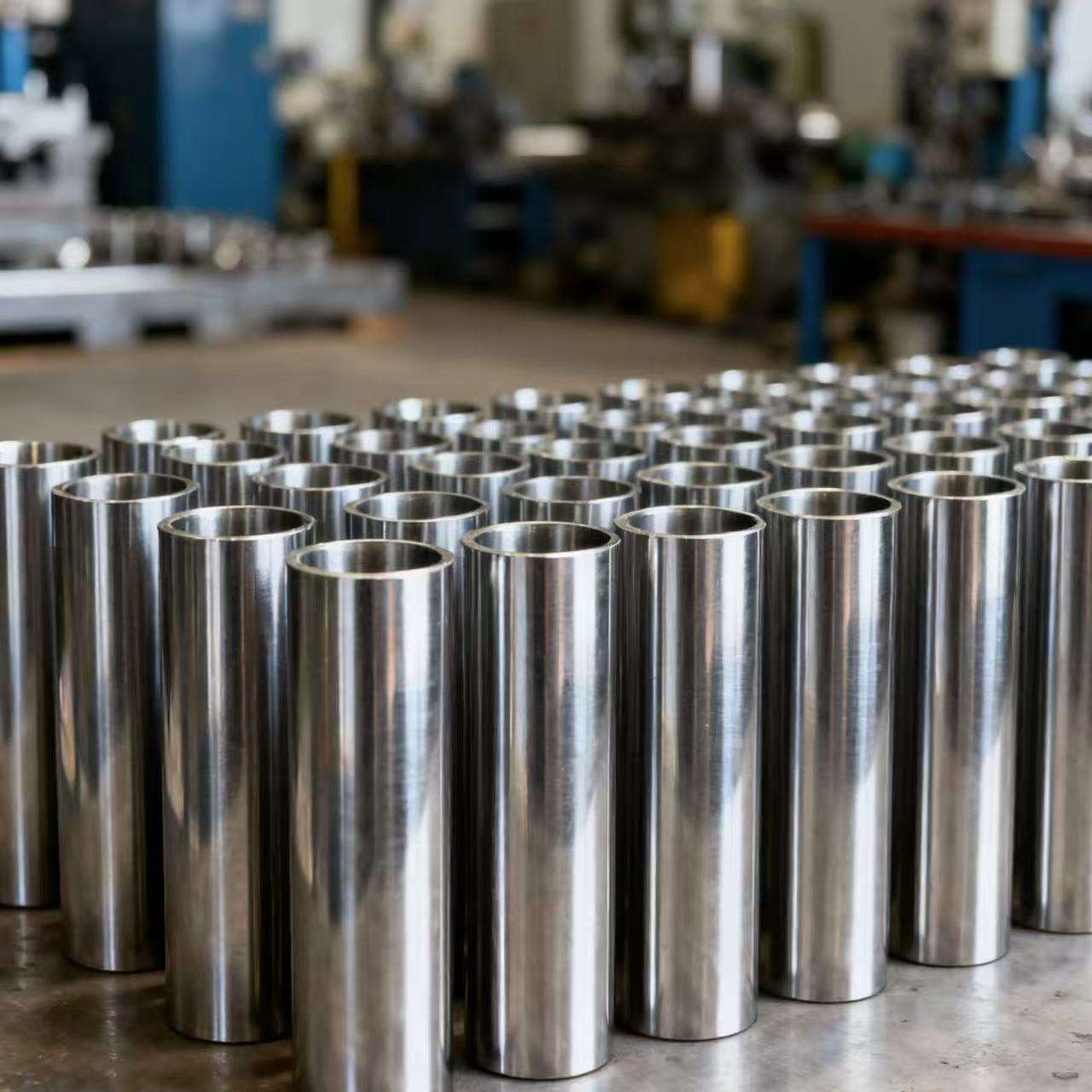
A stainless steel CNC sleeve is a cylindrical or custom-shaped component machined from a specific grade of stainless steel alloy. It is manufactured using precision CNC (Computer Numerical Control) turning and milling processes to achieve custom inner diameters, outer diameters, lengths, and features according to an engineering drawing.
Key Differences from Other Materials:
- vs. Carbon Steel: The primary advantage is corrosion resistance. Carbon steel sleeves will rust rapidly in the presence of moisture, whereas stainless steel will not.
- vs. Brass/Bronze: Stainless steel typically offers superior strength and far greater resistance to a wider range of chemicals.
- vs. Aluminum: Stainless steel is significantly stronger, harder, and more suitable for load-bearing applications.
These sleeves are manufactured to precise standards, including ISO fits for dimensional tolerance and specific Ra surface roughness ranges to ensure optimal performance.
Material Grades of Stainless Steel for CNC Sleeves
Not all stainless steel is created equal. The specific grade must be chosen based on the application’s environment and mechanical demands.
304 Stainless Steel
This is the most common and versatile grade, often referred to as 18/8 stainless. It offers excellent corrosion resistance in a wide range of atmospheric and mild chemical environments, making it a cost-effective choice for general industrial and food processing equipment.
316 / 316L Stainless Steel
Known as “marine grade,” 316 stainless steel contains molybdenum, which provides superior resistance to chlorides (like salt) and other corrosive chemicals. It is the go-to material for marine, offshore, and chemical processing equipment. The “L” grade (316L) has a lower carbon content, which improves its weldability and reduces the risk of sensitization.
17-4PH (630) Stainless Steel
This is a precipitation-hardening grade that uniquely combines the high strength of a heat-treatable steel with the excellent corrosion resistance of stainless steel. After heat treatment, it can achieve a very high hardness, making it ideal for applications that require both high loads and a corrosive environment, such as in high-pressure hydraulic systems or downhole drilling tools.
Material Comparison Table:
| Grade | Key Property | Strength | Corrosion Resistance | Typical Application Scenario |
|---|---|---|---|---|
| 304 | General Purpose, Hygienic | Good | Good | Food & beverage processing, architectural fittings |
| 316/316L | Superior Corrosion Resistance | Good | Excellent | Marine hardware, chemical pumps, pharmaceutical equipment |
| 17-4PH | High Strength & Hardness | Excellent | Very Good | High-pressure hydraulic systems, valve components, aerospace |
Advantages of Stainless Steel CNC Sleeves
For buyers, the higher initial cost of stainless steel is justified by several long-term advantages.
- ✅ High Corrosion Resistance: This is the primary benefit. Stainless steel sleeves will not rust or degrade when exposed to moisture, washdowns, or corrosive chemicals, ensuring the integrity of the equipment and preventing product contamination.
- ✅ High Strength and Wear Resistance: Grades like 17-4PH, when heat-treated, can offer strength and hardness comparable to some alloy steels, making them suitable for demanding load-bearing applications where carbon steel would fail.
- ✅ Hygiene and Cleanliness: The non-porous, smooth surface of stainless steel is easy to clean and sanitize, making it a mandatory requirement in the food, beverage, and pharmaceutical industries.
- ✅ Long Lifecycle and Lower TCO: While the upfront cost is higher, the extended service life and elimination of replacement cycles due to corrosion lead to a significantly lower Total Cost of Ownership.
Industrial Applications of Stainless Steel CNC Sleeves
The properties of stainless steel CNC sleeves make them essential in a wide range of industries.
- Marine & Offshore: Used in propeller shaft sleeves, rudder stocks, and pump components, where they must withstand constant exposure to saltwater.
- Food & Beverage Machinery: Sleeves in mixers, conveyors, and packaging equipment must be made from food-grade stainless steel (like 316L) to prevent rust and ensure product safety.
- Chemical & Pharmaceutical Equipment: Used in pumps, valves, and agitators that handle acidic or alkaline solutions, where chemical resistance is paramount.
- Hydraulic Systems: High-precision stainless steel sleeves are used in cylinders and actuators that operate in corrosive or wash-down environments, ensuring seal integrity and a long service life.
- Automotive & Heavy Equipment: Used in components exposed to road salt and moisture, such as in exhaust systems or specialized vehicle applications.
Surface Finish & Coatings for Stainless Steel Sleeves
Even with stainless steel, surface finish and treatments can further enhance performance.
- Ra Value Requirements: A controlled surface finish, typically in the Ra 0.4–1.6 µm range, is critical for ensuring a stable lubrication film and compatibility with seals. For more information, see our Advanced Guide to CNC Bushing Tolerances.
- Electropolishing: This electrochemical process removes a microscopic layer of material from the surface. It results in a smoother, brighter, and more corrosion-resistant finish by removing any free iron particles left from machining.
- Hard Coatings (e.g., DLC): For applications that require extreme wear resistance on top of corrosion resistance, a Diamond-Like Carbon (DLC) coating can be applied to further harden the surface.
- Passivation: This is a critical final step for any machined stainless steel part. It is a chemical treatment that removes free iron and other contaminants from the surface and helps to form a robust passive oxide layer, maximizing the material’s natural corrosion resistance.
Buyer’s Tip: Always request passivation or electropolishing when sourcing stainless steel CNC sleeves for food or pharmaceutical equipment.
Quality & Procurement Considerations for Buyers
When sourcing stainless steel sleeves, rigorous quality control is essential.
- Request Material Test Certificates (MTC): This is non-negotiable. An MTC is your only guarantee that you are receiving the correct grade of stainless steel (e.g., 316L vs. a cheaper 304).
- Demand CMM Reports: For parts with tight tolerances, a Coordinate Measuring Machine (CMM) report is needed to verify critical features like concentricity and roundness.
- Hardness Testing: This is mandatory for any heat-treated grades like 17-4PH to ensure they have achieved the required strength.
- Packaging & Export Requirements: Even stainless steel can be susceptible to surface contamination. Ensure your supplier uses clean packaging with protective wrapping, VCI (Vapor Corrosion Inhibitor) bags, and ISPM 15 compliant wooden crates for international shipping.
Case Example
A manufacturer of food processing equipment was using chrome-plated carbon steel sleeves in their mixing machines. However, the abrasive food products and frequent high-pressure chemical washdowns caused the chrome plating to eventually chip and peel. This exposed the underlying carbon steel, which would then rust, creating a critical risk of product contamination. The sleeves required replacement every 3 months.
They switched to a custom CNC sleeve machined from solid 316L stainless steel. Although the initial unit cost was higher, the new sleeves were completely immune to rust and resistant to the cleaning chemicals. The service life extended to over 12 months, eliminating unplanned downtime and the risk of contamination. This change significantly reduced their customers’ maintenance costs and reinforced their brand’s reputation for quality and safety.
Conclusion
Stainless steel CNC sleeves are a strategic investment in reliability, longevity, and compliance for any industrial application operating in a harsh or hygienic environment. By choosing the correct grade and partnering with a manufacturer who can provide precision machining and full quality documentation, buyers can secure a solution that delivers exceptional long-term value.
Contact our engineering team today for a quotation on CNC sleeves that meet the demanding standards of the food, chemical, and marine industries.