
Small Precision Shafts for Electronics: Materials, Tolerances, and Manufacturing Challenges
1. Introduction
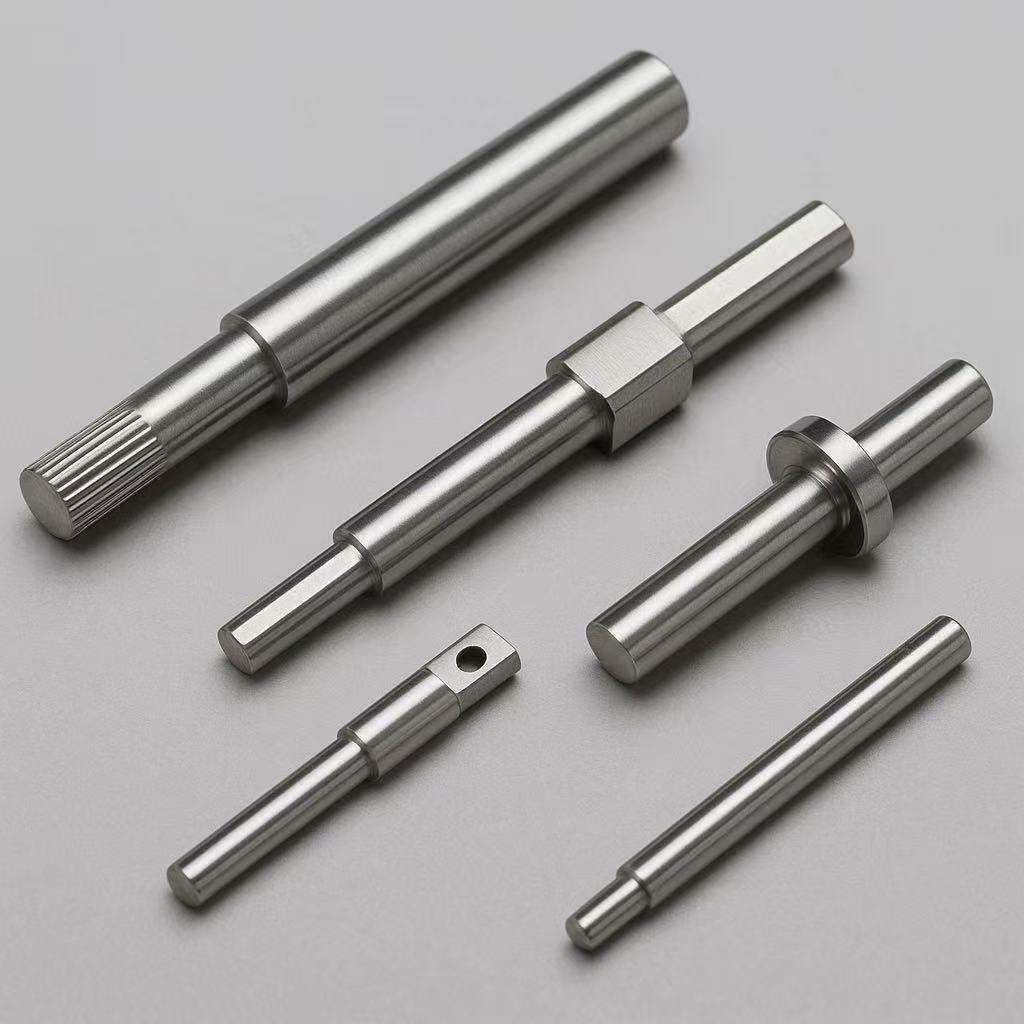
In the relentless drive toward miniaturization within the electronics industry, the mechanical components supporting these devices often escape the spotlight. However, small precision shafts—typically ranging from Ø1mm to Ø10mm—are the silent backbones of modern electronic functionality. Whether driving a micro-cooling fan in a server rack, actuating a haptic feedback motor in a wearable device, or positioning an optical lens in a medical sensor, these components are critical to system performance.
For industrial buyers and OEM engineers, sourcing these components presents a unique paradox: as the shaft becomes smaller, the engineering challenge grows larger. In a shaft with a diameter of 2mm, a tolerance deviation of just 0.01mm represents a significant percentage error, potentially leading to catastrophic noise, vibration, or seizure. For procurement teams, failures in micro shafts often appear as unexplained noise, shortened motor life, or assembly rework—long before the root cause is traced back to micron-level machining errors.
Unlike general industrial machinery where mass can dampen vibration, lightweight electronic assemblies have zero tolerance for geometric errors. This guide explores the specific manufacturing realities, material considerations, and sourcing strategies required for CNC shafts for electronics.
2. Typical Applications of Small Precision Shafts in Electronics
The application landscape for precision miniature shafts extends far beyond consumer gadgets. They are integral to high-reliability industrial and medical electronic systems.
Micro Motors: The most common application. Shafts for brushless DC (BLDC) motors used in cooling fans, vibration alerts, and camera gimbals require high hardness and perfect runout control to operate silently at high RPMs.
Sensors and Encoders: Rotary encoders used in robotics and automation rely on precision shafts to transmit rotational data without hysteresis or backlash.
Actuators: Linear actuators in smart home devices and medical dosing pumps utilize threaded or lead-screw shafts to convert rotary motion into precise linear positioning.
Optical Mechanisms: In camera modules and laser positioning systems, shafts act as guide rails. Here, surface finish is paramount to ensure smooth, stick-slip-free movement.
3. Key Engineering Challenges in Small Shaft Manufacturing
Manufacturing small precision shafts is not simply a matter of scaling down standard turning operations. The physics of machining changes at the micro scale.
High Length-to-Diameter (L/D) Ratios: Electronics often require long, slender shafts. A 3mm diameter shaft that is 100mm long has an L/D ratio of over 33:1. Without specialized support, the pressure of the cutting tool will cause the shaft to deflect or “whip,” resulting in tapered or oval parts.
Tool Deflection: At micro scales, the cutting tool cannot be pushed aggressively. Material removal rates must be managed carefully to prevent bending the workpiece.
Burr Formation: On a 2mm shaft, a 0.1mm burr is a massive defect that can prevent assembly or short-circuit nearby electronics. Deburring must be integrated into the primary machining process.
Handling Damage: Small shafts are fragile. Ejecting a completed part into a standard bin can bend it or scratch the precision ground surface.
4. Material Selection for Electronic Precision Shafts
Material selection in electronics is driven by a combination of mechanical strength, magnetic properties, electrical conductivity, and corrosion resistance.
Stainless Steel (303, 304, 316): The dominant material class.
303: Free-machining, ideal for high-volume Swiss turning but has lower corrosion resistance.
304/316: Required for medical electronics or outdoor sensors due to superior corrosion resistance, though harder to machine.
400 Series: Used when magnetic permeability is required for motor flux paths.
Carbon Steel: Used for cost-sensitive electronic motor shafts where the component is enclosed and greased, mitigating rust risks.
Brass: Selected for components requiring electrical conductivity or low-friction bearing surfaces.
Aluminum: Used in weight-critical applications (e.g., drone gimbals), though surface anodizing is often required for wear resistance.
5. CNC Machining Processes for Small Precision Shafts
Standard CNC lathes are rarely suitable for micro shafts manufacturing due to the inability to support the workpiece close to the cutting tool.
Swiss-Type CNC Turning
This is the industry standard for small electronics shafts. In a Swiss lathe, the bar stock slides through a guide bushing, and the cutting tool remains stationary in the Z-axis. The turning takes place immediately next to the guide bushing (often within 1mm). This setup virtually eliminates deflection, allowing for the machining of extremely long and thin shafts with tight tolerances.
CNC Grinding
For tolerances tighter than what turning can achieve (typically < ±0.005mm), centerless grinding is employed. This process provides superior roundness and surface finish, critical for high-speed motor journals.
Micro Milling
Secondary features like D-cuts, cross-holes, or keyways are often machined using live tooling within the Swiss lathe to maintain concentricity without a secondary setup.
6. Tolerance & Surface Finish Requirements
In the context of tight tolerance shafts for electronics, “precision” is quantified in microns. At a Ø2mm shaft diameter, a 0.005mm deviation represents 0.25% of the total diameter—an error magnitude that would be negligible on a Ø50mm shaft but critical at the micro scale.
Diameter Tolerance: Electronic motor journals often require ±0.002mm to ±0.005mm. A loose fit causes rattle and noise; a tight fit causes bearing compression and failure.
Runout & Concentricity: For a motor spinning at 10,000 RPM, Total Indicated Runout (TIR) must often be kept below 0.01mm. Excessive runout creates vibration that the small mass of the device cannot dampen.
Surface Roughness (Ra): Bearings and bushings require a smooth, consistent surface, typically Ra 0.2–0.4 µm. However, a surface that is too smooth can cause “stiction” or lubrication failure.
Geometric Tolerance: Cylindricity (straightness + roundness) is critical. A shaft that measures correct at two points but is bent (banana-shaped) will bind in the assembly.
7. Quality Control & Inspection Challenges
Verifying the quality of a Ø2mm shaft is a technical challenge in itself. Standard handheld calipers are often insufficient; the pressure of the caliper jaws alone can deflect a thin shaft or mar the surface.
Advanced Measurement Technologies:
Laser Micrometers: Non-contact measurement is preferred for high-speed checking of diameter and runout without risking part deformation.
Optical Comparators / Video Measurement: Used to verify complex profiles, chamfers, and groove widths that are too small for contact probes.
Air Gauging: Essential for checking roundness and diameter in a production environment with sub-micron repeatability.
Contamination Control:
Inspection must occur in clean environments. Dust, oil, or fingerprints on a micro shaft can affect measurement readings and compromise final assembly cleanliness.
8. Common Quality Issues in Small Electronic Shafts
Buyers should be aware of the specific failure modes associated with small precision shafts:
Burrs and Deformation: Micro-burrs on cross-holes or shaft ends interfere with bearing insertion.
Bending: Shafts often bend after machining due to improper ejection from the machine or rough handling during washing and plating.
Surface Scratches: In optical or sliding applications, a single scratch can render the part scrap.
Size Drift: Because tools wear faster when cutting small diameters (due to heat concentration), diameter consistency can drift across a large batch if the supplier lacks automated compensation.
9. What Electronics Buyers Should Look for in Shaft Suppliers
Sourcing CNC shafts for electronics requires vetting suppliers for specific capabilities rather than general machining capacity.
Buyer Checklist:
Swiss-Type Capability: Does the supplier utilize Swiss-style lathes? This is non-negotiable for L/D ratios > 3:1.
Micro-Machining Experience: Do they understand the nuances of micro-burr removal and thermal expansion?
In-House Grinding: For the tightest tolerances, suppliers with in-house centerless grinding offer better control over lead time and quality.
Handling Protocols: Do they use specialized trays or vacuum packaging to prevent parts from impacting each other during transport?
Inspection Infrastructure: Do they possess laser or optical measurement systems suitable for micro parts?
Supplier Focus: Suppliers accustomed to automotive or heavy-industry shafts often underestimate micro-shaft challenges—prior electronics or medical component experience should be explicitly verified.
10. Conclusion
The production of small precision shafts for the electronics industry is a discipline defined by discipline. It requires a departure from “heavy metal” machining mentalities and an adoption of instrument-grade precision. As devices continue to shrink and performance expectations rise, the margin for error in shaft manufacturing has all but vanished.
For OEMs and industrial buyers, the priority must be on identifying suppliers who combine the right technology (Swiss turning) with rigorous process control (non-contact inspection and careful handling). Selecting a supplier based on capability rather than lowest piece-price is the most effective strategy to ensure the long-term reliability and performance of the final electronic product. As electronic systems continue to shrink, sourcing capable manufacturers of small precision CNC shafts for electronics will become a defining factor in product reliability and lifecycle cost.