
Materials for CNC Hydraulic Fittings: Carbon Steel vs Stainless Steel Explained
1. Introduction: Why Material Selection Matters in Hydraulic Fittings
For industrial buyers and engineers, selecting the right materials for CNC hydraulic fittings is critical to ensuring system safety, pressure performance, and long-term durability in high-pressure environments. Fluid power systems operate under extreme conditions, often handling pressures exceeding 5,000 PSI while exposed to harsh environmental elements. In these demanding applications, connection points are the most vulnerable links. A single ruptured fitting can lead to catastrophic equipment failure, severe safety hazards, and costly operational downtime.
For OEM procurement managers, proper hydraulic fittings material selection is a critical decision that balances safety, performance, and budget. The metallurgical properties of a fitting directly dictate its pressure capacity, its resistance to environmental corrosion, and its overall operational lifespan. By understanding how different metals perform under stress, buyers can make informed procurement decisions that ensure long-term system reliability without unnecessary overspending on raw hydraulic fittings materials.
2. Key Factors in Material Selection
Proper material selection requires evaluating several competing mechanical and environmental variables before sending an RFQ.
Pressure Rating: The material must possess the tensile strength required to handle not just the continuous working pressure, but also the sudden, intense pressure spikes common in heavy machinery.
Corrosion Resistance: Components exposed to saltwater, harsh chemicals, or extreme weather require materials that resist oxidation and chemical degradation.
Temperature: Extreme heat can degrade the structural integrity of some metals, while sub-zero temperatures can make certain alloys brittle.
Fluid Compatibility: The metal must be chemically compatible with the hydraulic fluid being used, whether it is standard petroleum-based oil, water-glycol, or synthetic fire-resistant fluids.
Cost vs. Performance: Buyers must weigh the upfront cost of premium alloys against the lifecycle cost of replacing cheaper, corroded parts.
3. Carbon Steel Hydraulic Fittings
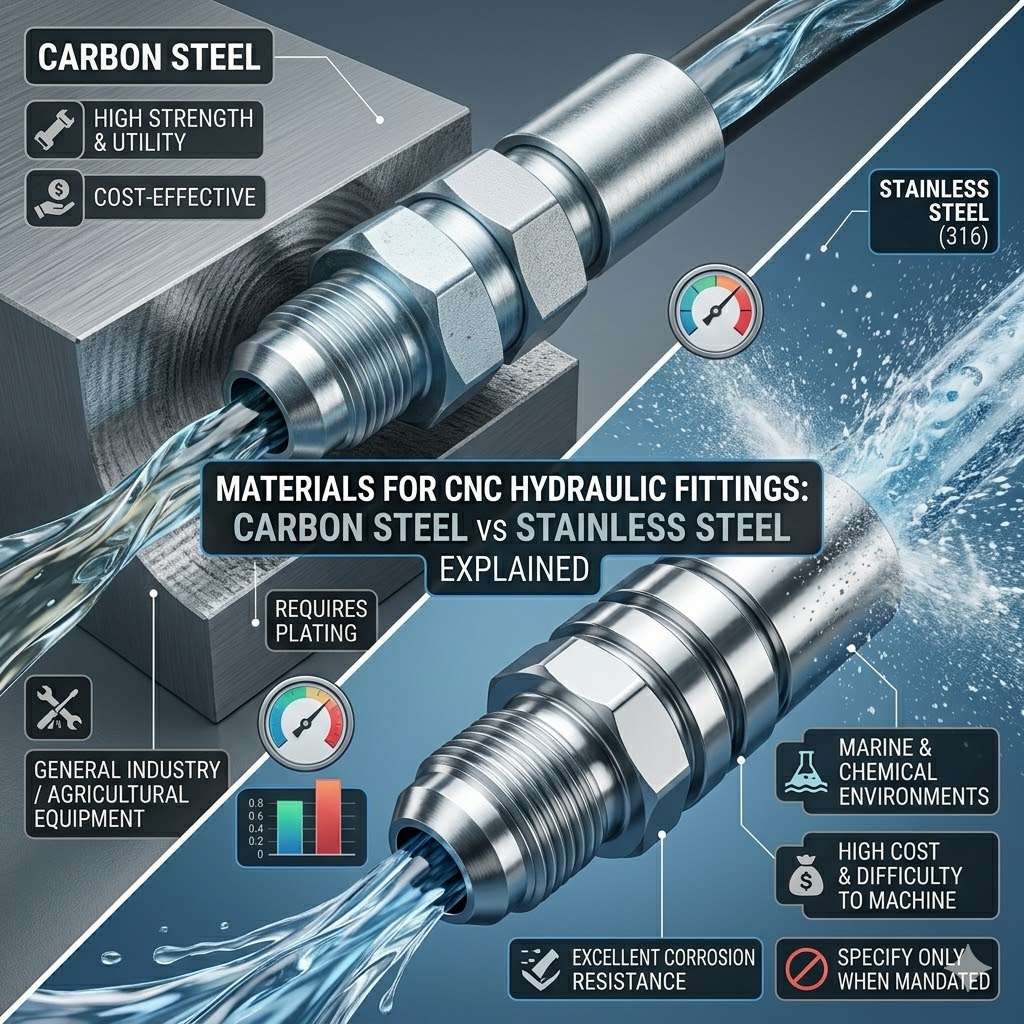
Carbon steel is the undisputed workhorse of the fluid power industry. It offers exceptionally high tensile strength, making it fully capable of handling the extreme pressures found in modern hydraulic systems. Additionally, carbon steel is highly cost-effective and relatively easy to machine, keeping manufacturing costs low.
The primary drawback of carbon steel is its high susceptibility to rust and oxidation. To survive in industrial environments, carbon steel fittings must undergo secondary surface treatments. When properly coated with standard zinc or advanced zinc-nickel plating, carbon steel provides an excellent balance of strength, durability, and affordability. It is the standard choice for general construction machinery, factory automation, and agricultural equipment.
4. Stainless Steel Hydraulic Fittings
When evaluating carbon steel vs stainless steel hydraulic fittings, the decision almost always comes down to the operating environment. Stainless steel is chosen when superior corrosion resistance is non-negotiable.
Grade 304 stainless steel offers excellent general corrosion resistance. However, for marine applications, offshore drilling, and chemical processing, Grade 316 is the industry standard. Grade 316 contains molybdenum, which drastically improves its resistance to harsh chlorides and saltwater.
While stainless steel offers exceptional longevity, it comes at a premium. The raw material is significantly more expensive than carbon steel, and it is notoriously difficult to machine due to work-hardening. Buyers should specify stainless steel only when the environmental conditions absolutely mandate it, as over-specifying this material will rapidly inflate project budgets. In most industrial applications, stainless steel should only be selected when corrosion resistance is a critical requirement that cannot be addressed by coated carbon steel.
5. Alloy Steel for High Pressure Applications
Standard carbon steel and stainless steel are sufficient for most commercial applications. However, ultra-high-pressure systems—operating at 10,000 PSI and above—require specialized metallurgy.
Engineers turn to high-strength alloy steels, such as 4140 or 4340, for these extreme applications. These alloys contain chromium and molybdenum, offering immense tensile strength and exceptional fatigue resistance against relentless pressure transients. Alloy steel fittings are typically heat-treated after machining to achieve their final mechanical properties. They are heavily utilized in blowout preventers, heavy lifting jacks, and specialized waterjet cutting equipment.
6. Brass and Aluminum Fittings
While less common in heavy-duty fluid power, brass and aluminum serve specific niche roles.
Brass: Brass is highly machinable and naturally resistant to corrosion. However, it is a soft metal with low tensile strength. Brass fittings are strictly limited to low-pressure applications, such as pneumatic lines, potable water systems, and low-pressure return lines in hydraulic circuits.
Aluminum: Aluminum alloys (like 6061-T6) offer an outstanding strength-to-weight ratio. They are utilized when weight reduction is the primary engineering goal, such as in aerospace hydraulics, mobile robotics, and high-performance automotive systems. Because aluminum lacks the raw strength of steel, its pressure ratings are significantly lower.
7. Machinability and CNC Considerations
The choice of raw material directly impacts the manufacturing process on the shop floor. When evaluating CNC machined hydraulic fittings materials, buyers must understand how machinability affects the final unit price.
Harder materials like stainless steel and alloy steel require slower spindle speeds, lighter depths of cut, and highly rigid CNC machinery. They also rapidly wear out expensive carbide cutting tools. This increased cycle time and tooling consumption directly translate to higher manufacturing costs.
Furthermore, the material dictates how easily the machine shop can achieve the required surface finish. A flawless surface finish (often Ra 1.6 μm or better) is absolutely critical for the sealing faces of JIC flares or O-ring grooves. If the material is prone to tearing or galling during machining, the resulting rough surface will shred O-rings and cause high-pressure leaks.
8. Surface Treatments and Coatings
For metals prone to oxidation, the surface coating is just as important as the base metal itself. Applying the correct treatment extends the lifespan of hydraulic fittings materials in the field.
Zinc Plating: The industry standard for carbon steel. It provides a sacrificial barrier against rust and is highly cost-effective for normal industrial environments.
Zinc-Nickel Plating: An advanced coating that offers up to ten times the corrosion resistance of standard zinc. It is increasingly specified for mobile equipment exposed to road salts and severe weather.
Passivation: A chemical treatment used on stainless steel to remove free iron from the surface, accelerating the formation of a protective chromium-oxide layer.
Anodizing: An electrochemical process that thickens the natural oxide layer on aluminum fittings, significantly improving their surface hardness and wear resistance.
9. Material Comparison Table
To streamline procurement decisions, use the following matrix to compare the primary materials for CNC hydraulic fittings:
| Material Type | Tensile Strength | Corrosion Resistance | Relative Cost | Typical Application |
| Carbon Steel | High | Low (Requires plating) | Low | Construction, Agriculture, General Industry |
| Stainless Steel (316) | High | Excellent | High | Marine, Chemical, Offshore Oil & Gas |
| Alloy Steel (4140) | Very High | Low (Requires plating) | Medium-High | Ultra-High Pressure (10,000+ PSI) |
| Brass | Low | Good | Medium | Low-Pressure Pneumatics, Water lines |
| Aluminum (6061) | Medium | Good (When anodized) | Medium | Aerospace, Robotics, Weight-sensitive |
10. Common Material Selection Mistakes
In procurement, specifying the wrong materials leads to immediate mechanical failures or wasted budgets. Common pitfalls include:
Choosing Stainless Unnecessarily: Specifying 316 stainless steel for a standard indoor factory machine is a massive waste of budget. Zinc-plated carbon steel performs perfectly well in dry, indoor environments at a fraction of the cost.
Ignoring Environmental Corrosion: Using standard zinc-plated carbon steel on a marine vessel will result in rapid rusting and structural failure. The harsh environment justifies the cost of stainless steel.
Wrong Material for the Pressure Level: Attempting to use brass fittings in a 3,000 PSI circuit will result in an immediate and dangerous blowout.
Misunderstanding Lifecycle Costs: A buyer may save money upfront by purchasing standard zinc-plated fittings for a salt-spreader truck, but the high cost of machine downtime and premature replacements will far exceed the initial savings of choosing a zinc-nickel coating.
11. Applications by Industry
Different industries require different materials for CNC hydraulic fittings based on operating conditions:
Construction Machinery: Heavily reliant on zinc-nickel plated carbon steel to balance high strength with outdoor weather resistance.
Oil & Gas: Demands 316L stainless steel for offshore platforms and high-strength alloy steels for deep-well drilling equipment.
Agriculture: Utilizes standard carbon steel, often with heavy zinc plating, to handle the physical abuse of farming implements and exposure to fertilizers.
Industrial Automation: Employs a mix of carbon steel for high-pressure presses and aluminum for lightweight, fast-moving robotic end-effectors.
12. Conclusion
The safety and efficiency of any fluid power system rely heavily on the integrity of its connection points. Proper hydraulic fittings material selection requires a careful analysis of system pressure, environmental exposure, and budget constraints. Whether utilizing cost-effective carbon steel for an excavator or specifying marine-grade stainless steel for an offshore rig, the material must align perfectly with the engineering demands of the application.
For industrial buyers, working with an experienced CNC hydraulic fittings supplier ensures correct material selection, reliable machining quality, and long-term performance in demanding environments.