
CNC Sleeves for Hydraulic Systems: A Buyer’s Guide
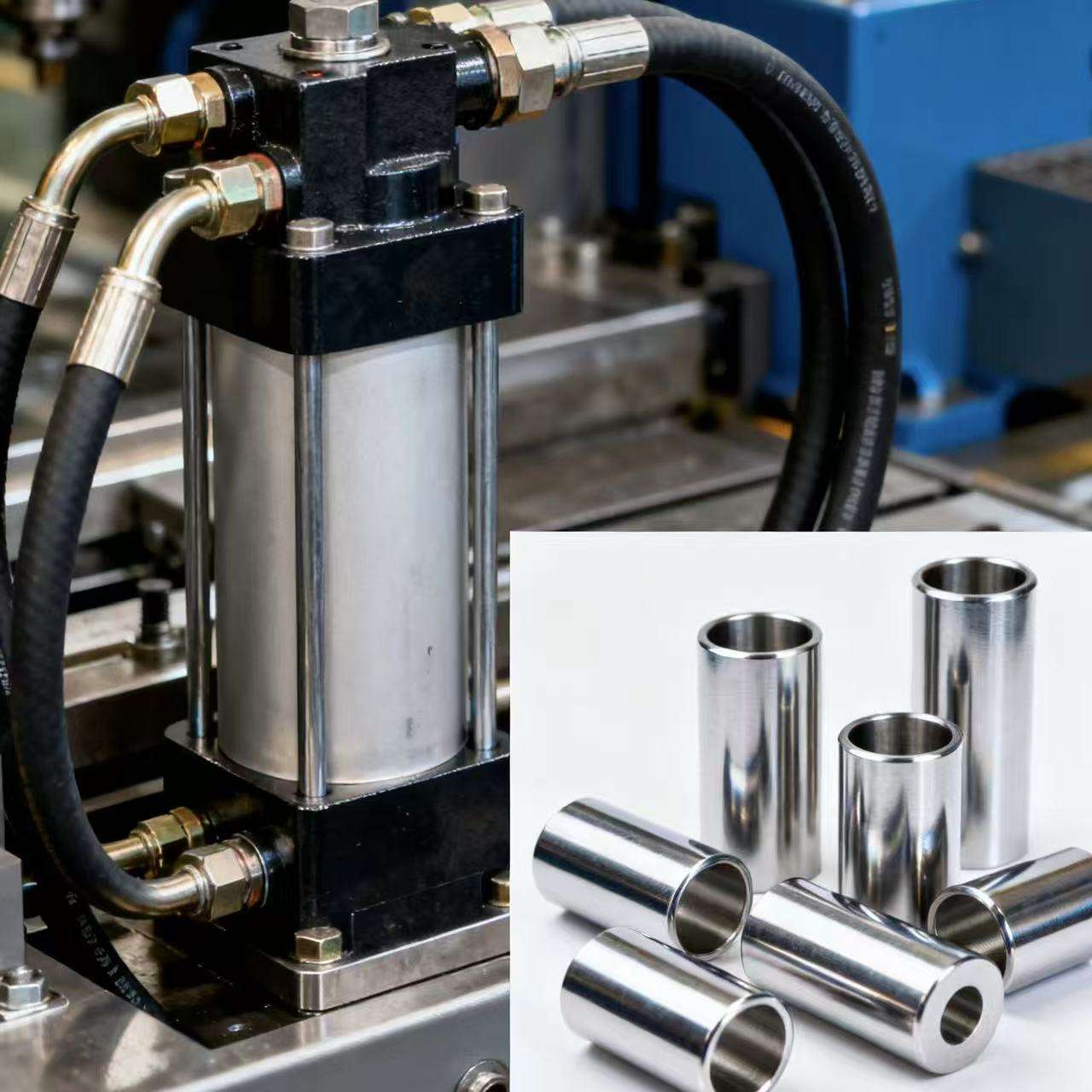
CNC Sleeves for Hydraulic Systems: A Buyer’s Guide
Meta Description: Learn why CNC sleeves are critical in hydraulic systems. This guide covers materials, tolerances, coatings, QC, and buyer tips for sourcing reliable suppliers.
1. Introduction
Hydraulic systems are the workhorses of modern industry. They provide the immense power needed to operate everything from massive excavators to precision industrial presses. The reliability of this equipment hinges on its core components. These parts operate under extreme pressure and constant motion. Among the most critical of these are CNC sleeves. These precision-machined parts are essential for guiding piston rods, reducing wear, and ensuring the integrity of hydraulic seals.
For industrial buyers and engineers, sourcing the right sleeve is a high-stakes decision. A poor-quality component can lead to fluid leaks, premature wear, and catastrophic system failure. This results in costly downtime and safety risks. This guide provides a comprehensive overview of CNC sleeves for hydraulic systems. It covers material choices, precision tolerances, and essential quality control measures. This will help you make informed procurement decisions.
2. What Are CNC Sleeves in Hydraulic Systems?
In hydraulics, a CNC sleeve is a high-precision cylindrical component. It is installed within a hydraulic cylinder or valve body. It is manufactured using CNC (Computer Numerical Control) machining. This achieves extremely tight dimensional and geometric tolerances.
Their primary functions are:
- Guiding Piston Rods: Providing a smooth, perfectly aligned surface for the piston rod to travel along its stroke.
- Reducing Wear: Acting as a sacrificial wear surface. It protects the more expensive cylinder barrel and piston rod from direct metal-to-metal contact.
- Ensuring Seal Integrity: It provides a consistent, smooth sealing surface for hydraulic seals. This is critical for preventing fluid leaks in hydraulic cylinder sleeves.
3. The Importance of Precision in Hydraulic Systems
In a high-pressure hydraulic system, every component must work in perfect harmony. Precision-engineered hydraulic cylinder sleeves are vital for several reasons:
- Preventing Leakage: The fit between the sleeve, piston rod, and seals must be precise. This maintains hydraulic pressure. It also prevents both internal and external fluid leaks.
- Ensuring Smooth Operation: Any deviation in roundness or concentricity can cause the piston rod to bind or judder. This leads to inefficient operation and accelerated wear.
- Extending Service Life: High-quality sleeves are made from durable materials. They directly extend maintenance intervals and the overall cylinder lifespan. This significantly lowers the Total Cost of Ownership (TCO).
4. Best Materials for Hydraulic Cylinder Sleeves
The material must be chosen to withstand high pressures, friction, and potential corrosion from hydraulic fluids.
- Alloy Steel (e.g., 4140, 42CrMo): This is the most common choice for high-pressure applications. Alloy steel sleeves must be heat-treated (quenched and tempered). This achieves high strength and hardness (typically 58-62 HRC). It provides excellent resistance to wear and deformation under load.
- Stainless Steel (316L, 17-4PH): This is used in hydraulic systems that operate in corrosive environments. This includes marine, offshore, or chemical processing applications. Grade 17-4PH is particularly valuable. It combines high strength with excellent corrosion resistance.
- Bronze: Bronze sleeves are prized for their natural lubricity. They can also embed small contaminant particles. This helps protect the piston rod from scoring. They are an excellent choice for guide bushings, especially in applications with high side loads.
| Material | Pros | Cons | Typical Application |
|---|---|---|---|
| Alloy Steel | High strength, excellent wear resistance | Requires heat treatment & coating | High-pressure hydraulic cylinders |
| Stainless Steel | Superior corrosion resistance | Higher material cost | Marine & chemical hydraulics |
| Bronze | Self-lubricating, prevents galling | Lower strength than steel | Guide bushings, high side-load apps |
5. Precision & Tolerances
The ISO 286 tolerance standard is the language of precision in hydraulic sleeves.
- Critical Fits: A precise clearance fit, such as H7/g6, is often required. This fit is between the sleeve’s inner diameter and the piston rod. This provides a tight, guiding fit. It still allows for a microscopic film of hydraulic fluid to act as a lubricant.
- Geometric Control: Beyond basic diameters, a precision hydraulic sleeves manufacturer must control geometric tolerances. These include concentricity (to ensure the sleeve is centered) and roundness. This is verified using a Coordinate Measuring Machine (CMM).
6. Hydraulic Sleeve Surface Finish and Chrome Plating
The surface of a hydraulic sleeve is a critical functional interface.
- Ra Surface Roughness: The surface finish of the inner diameter is essential. It is typically specified between Ra 0.4–1.6 µm. A surface that is too rough will abrade and destroy hydraulic seals. A surface that is too smooth may not retain an adequate lubrication film.
- Hard Chrome Plating: This is a very common surface treatment for hydraulic sleeves made from alloy steel. It provides an extremely hard, low-friction, and corrosion-resistant surface. This surface is ideal for interacting with seals. It also withstands the hydraulic environment.
7. Case Example: The Cost of Poor Quality
A manufacturer of mobile construction equipment was sourcing hydraulic cylinder sleeves from a low-cost supplier. They experienced a high rate of field failures. These were due to hydraulic leaks within the first year of operation. This led to costly warranty claims. It also damaged their brand’s reputation.
An investigation revealed the sleeves had inconsistent concentricity. Their surface finish was also too rough. This was true even though they were dimensionally correct on average. This was causing the main piston rod seals to wear out prematurely. They switched to a new custom CNC sleeves supplier. This supplier provided a CMM report with every batch to guarantee concentricity. They also provided a profilometer report to verify the Ra surface roughness.
The new, higher-quality CNC sleeves for hydraulic systems had a higher unit price. However, the warranty claim rate dropped by over 80%. The extended service life of the cylinders and fewer field failures resulted in a lower TCO. It also restored customer confidence.
8. Buyer’s Checklist for Hydraulic Sleeves
When sourcing hydraulic sleeves, use this checklist to ensure you cover all critical requirements:
- ✅ Dimensions & Tolerances: Are all dimensions and the specific ISO 286 fit clearly defined on your drawing?
- ✅ Material & Hardness: Is the exact material grade and required hardness range (HRC) for heat-treated parts specified?
- ✅ Coating & Finish: Is the surface coating (e.g., hard chrome) and the Ra surface roughness value clearly stated?
- ✅ QC Reports: Have you requested a CMM report for geometric tolerances, a hardness test report, and a material certificate as mandatory deliverables?
- ✅ FAI Requirement: Always request a First Article Inspection (FAI) before mass production to validate the supplier’s process.
- ✅ Packaging: Have you specified robust, anti-rust packaging to protect the precision surfaces during transit?
9. Conclusion & Call to Action
In the high-stakes world of hydraulic equipment, CNC sleeves are a critical component where precision and quality cannot be compromised. Sourcing from a manufacturer who understands the technical demands of hydraulic systems is essential for ensuring the reliability, safety, and longevity of your products. By focusing on a supplier’s capabilities in tolerance control, material science, and quality assurance, buyers can make a strategic investment that lowers their Total Cost of Ownership.
Contact our engineering team today to request a quotation for custom CNC sleeves designed for the demanding environment of hydraulic systems. We are ready to deliver the precision and quality your equipment deserves.